Artex ceilings are one of the most common jobs we get called out for. Swirls, stipple, that combed pattern from the seventies and eighties — people live under it for years and then decide, usually mid-renovation, that it has to go.
There are two ways to deal with it, and picking the wrong one costs you money.
First: the asbestos question
Artex manufactured before the mid-1980s can contain chrysotile asbestos. It was used as a binder, and in an undisturbed ceiling it is not a risk.
The risk comes from disturbing it — sanding, scraping, breaking it up. Which is exactly what “removing artex” means.
If your property predates 1985 and you do not know what the ceiling contains, get it tested before anyone touches it. A sample test is inexpensive and it changes what a competent contractor will do. Anyone offering to sand an unknown artex ceiling is telling you something about how they work.
Both methods below avoid breaking the surface up, which is the main reason we prefer them to removal.
Option one: bond and skim
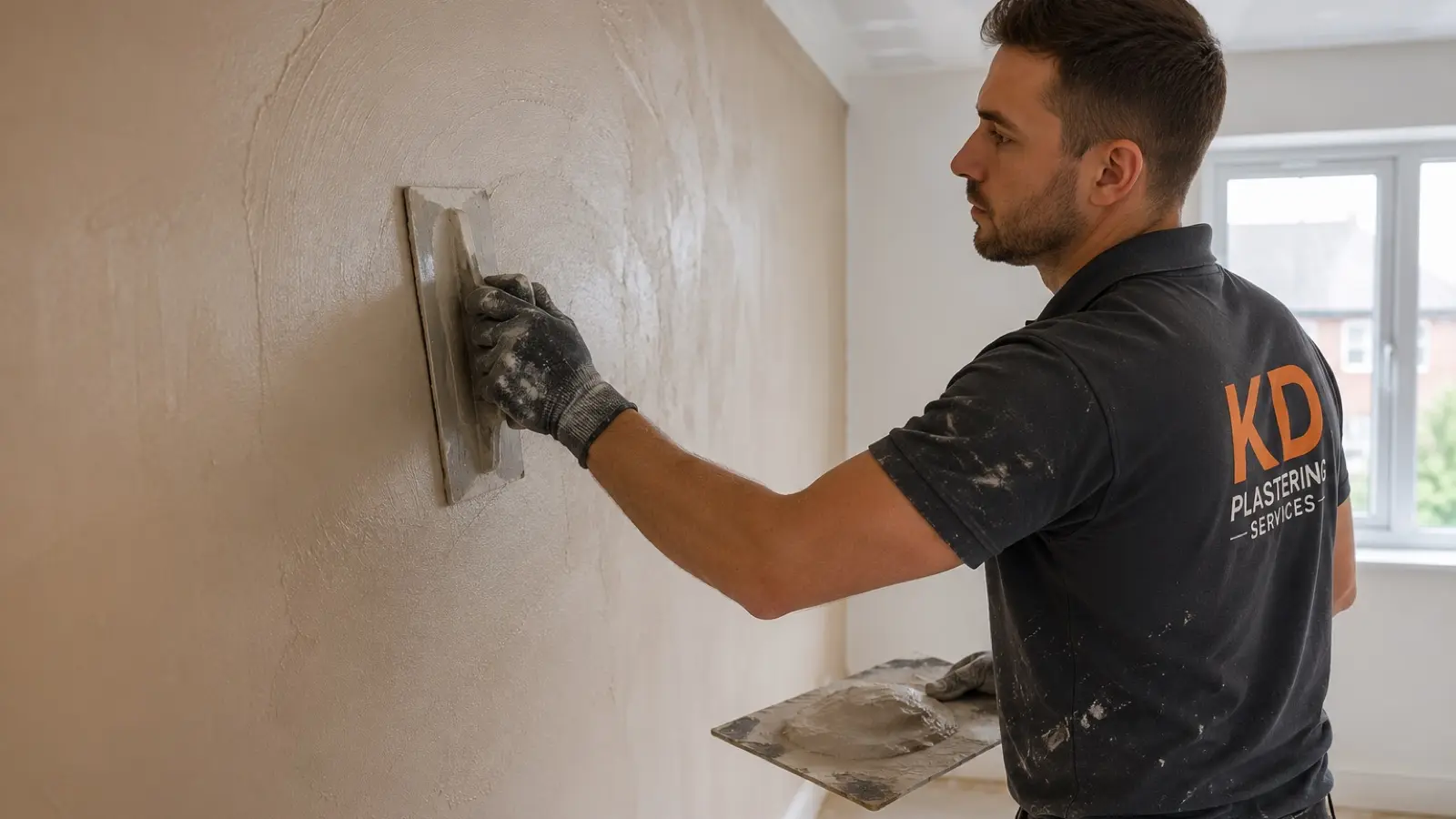
If the artex is sound and the pattern is shallow, we apply a bonding agent straight over it, then a two-coat multi-finish skim on top.
When it works: the ceiling is firmly attached, the pattern is not deep, and the boards behind it are sound.
What you get: a flat ceiling in a day for most rooms, with minimal loss of ceiling height.
How to test it: press firmly across the ceiling in several places. Any give, any movement, any hollow sound means the boards or the artex itself have lost their grip.
Option two: overboard, then skim
We fix new plasterboard through the artex into the joists, then skim the new board.
When it is necessary: the ceiling is sagging, the artex is loose, the pattern is deep enough that a skim would not bury it, or there is water damage in the existing boards.
What you get: a genuinely flat ceiling and a fresh substrate. It costs more, takes longer, and drops the ceiling by around 12mm — which nobody notices in practice.
The advantage nobody mentions: overboarding seals the artex behind new board rather than disturbing it.
Which one you will actually need
In our experience it is roughly even. Post-war and sixties ceilings with a deep pattern usually need overboarding. Later, shallower artex over sound boards is normally a bond-and-skim.
We will not know for certain until we are standing under it, which is why the survey is free and why a price quoted over the phone is a guess.
What to expect on the day
Ceilings are messy work, and honest reviews say so. Furniture goes out or gets sheeted, floors get covered, and there will be dust regardless of how careful the sheeting is. A skimmed ceiling needs a few days before it is ready to paint.
Most single rooms are a one-day job. A three-ceiling job is usually a long day rather than two.
Related work
Artex removal usually comes up alongside a wider re-skim — after rewiring, after a leak, or as part of a renovation. If you are having several rooms done, it is cheaper per room to do them together than to call us back twice.
