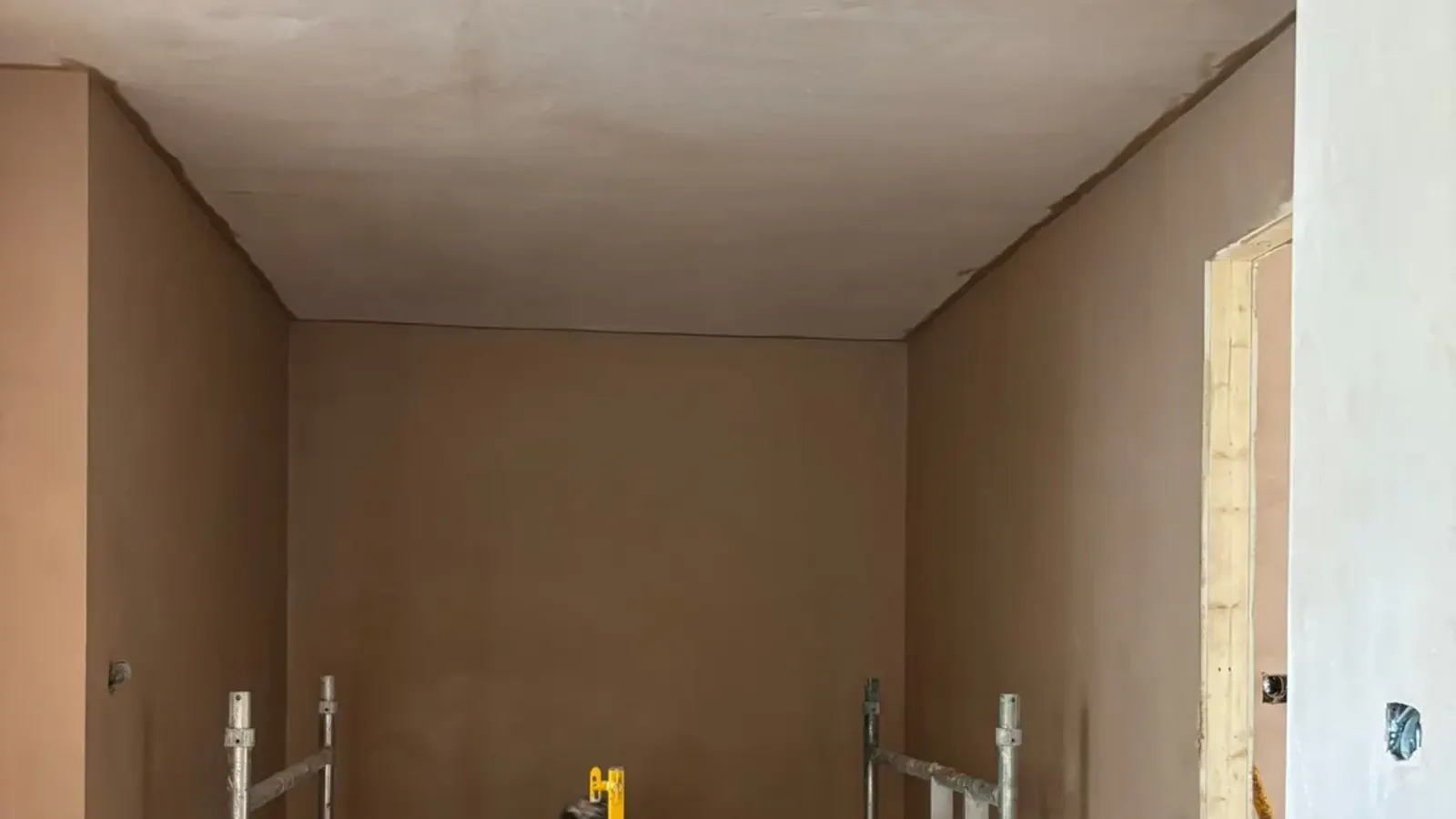
Most Victorian and Edwardian terraces in St George have at least one ceiling with a crack running across it. Some of those cracks have been there for thirty years and will be there for thirty more. Others are the first sign that the whole ceiling is coming down. The job is telling them apart before you pay for the wrong fix.
What your ceiling is actually made of
If the house was built before the 1920s or so, the ceiling is almost certainly lath and plaster. Thin strips of timber (laths) are nailed across the joists with small gaps between them. Wet plaster was pushed through the gaps and squeezed out the back into lumps called keys. Those keys hold the ceiling up.
Over a hundred-odd years, the keys can snap. Causes include vibration, repeated redecorating that adds weight, water from a leaking bath or roof, and people walking about on the floor above. Once the keys go, the plaster is hanging on by its edges and a bit of paint. That is a failing ceiling, not a cracked one.
Hairline crack or failing ceiling?
Do these checks with the lights on, from the floor. Don’t stand on anything and push at it.
Signs it’s probably just a crack
- The crack is thinner than a coin edge and has been the same for months
- It runs along the line of a lath, or along the join with the wall
- Both sides of the crack sit flush
- The ceiling is flat when you sight along it from the doorway
- Tapping nearby with a knuckle gives a solid, dull sound
This is usually seasonal movement in the house. It’s cosmetic.
Signs the ceiling is failing
- A visible belly or sag, especially between joists
- Cracks with a step, where one side sits lower than the other
- Lots of cracks forming a map pattern
- A hollow, drummy sound when you tap, or a slight bounce under a flat palm
- Fine plaster dust or crumbs on the carpet or window sill
- Brown stains, which mean water. Fix the leak first, because wet laths rot
One sign alone isn’t a verdict. A sag plus a bounce plus dust is a clear one. If a section is visibly drooping, keep people out from underneath it until it’s been looked at.
The three fixes
1. Patch and fill
This suits a stable hairline crack in a ceiling that is otherwise firm. We rake the crack out slightly, bed in scrim or tape, fill with a suitable compound and sand flush before you repaint.
The catch is honesty about movement. If the house is still moving along that line, the crack can come back. Filling a crack that has a reason to be there often just moves the crack a few months down the road. A flexible filler and tape give it the best chance, but there are no guarantees on a line that moves.
2. Re-skim
This suits a ceiling that is still firmly attached but has a tired surface. Typical cases are lots of fine crazing, old paint that’s flaking, patched repairs showing through, or a lumpy finish.
The process, in order:
- Tap the whole ceiling to find loose areas.
- Screw any loose plaster back to the joists with ceiling screws and washers, or cut it out if it’s too far gone.
- Treat the surface so the new plaster bonds properly.
- Tape the joints and cracks.
- Apply two thin coats of finish plaster and trowel to a flat, smooth surface.
The catch: a skim is thin, and it is a finish, not a structural repair. It cannot hold a ceiling up. Skimming over plaster that has lost its keys adds weight and hides the problem until the ceiling comes down anyway. If the tap test turns up large hollow areas, a skim alone is the wrong answer.
3. Replace
This is for ceilings where the keys have failed across a big area, where water has rotted the laths, or where the ceiling is sagging.
There are two routes:
- Strip and board. The old lath and plaster comes down, we check the joists, and the ceiling is boarded with plasterboard, taped and skimmed. This gives the most reliable result, and it’s the right call when much of the ceiling is loose anyway.
- Overboard. Plasterboard is fixed up through the old ceiling into the joists, then skimmed. It’s much less messy and keeps the dust down. The cost is a little lost ceiling height, and cornices or coving may need dealing with. It only works if the old ceiling is not so far gone that it can’t be pinned up.
Stripping is dusty and the debris is heavy, so expect the room to be emptied and floors protected. Take the opportunity to have any wiring or lighting that runs above checked while the ceiling is open.
If there’s a decorative cornice you want to keep, say so at the survey. It is sometimes possible to work around it.
Quick guide
| What you see | Likely fix |
|---|---|
| Single hairline crack, ceiling flat and solid | Patch and fill |
| Crazing, flaking paint, old patches, still firm | Re-skim |
| Some loose patches, rest solid | Re-fix, then re-skim |
| Sag, stepped cracks, hollow over a large area | Replace (strip or overboard) |
| Water stains | Fix the leak, then reassess |
The cost depends heavily on room size, access, what’s above, and how much of the old ceiling has to come down. A patch and a full replacement are very different jobs. That is why we look first and then write a fixed quote.
Why not leave it until spring?
Winter is the right time for ceilings. Indoor plastering carries on whatever the weather, while outside rendering waits for milder days. The run-up to Christmas is when diaries fill up fastest, because everyone wants the front room finished before the family arrives. If you want a ceiling done and dry before then, book it early rather than in December.
New plaster dries more slowly in cold, damp weather. Keep the room gently warm and open a window a little. Pointing a heater straight at fresh plaster can make it crack. Leave it until it is an even pale pink all over before you paint, and use a watered-down mist coat first.
What we do about it
We’re based in Hanham, so St George is on our doorstep. The first step is a free site visit, where we do the tap test properly, look at the joists where we can, and tell you plainly which of the three fixes the ceiling needs. If a filler job is all it needs, we’ll say so. A fixed written quote follows within 48 hours, and our plastering comes with a 5-year workmanship warranty.
You can see how we approach this on our ceiling plastering service page, including what a typical job involves from start to finish.
If you’ve got a ceiling you’re not sure about, get in touch and we’ll come and have a look.
