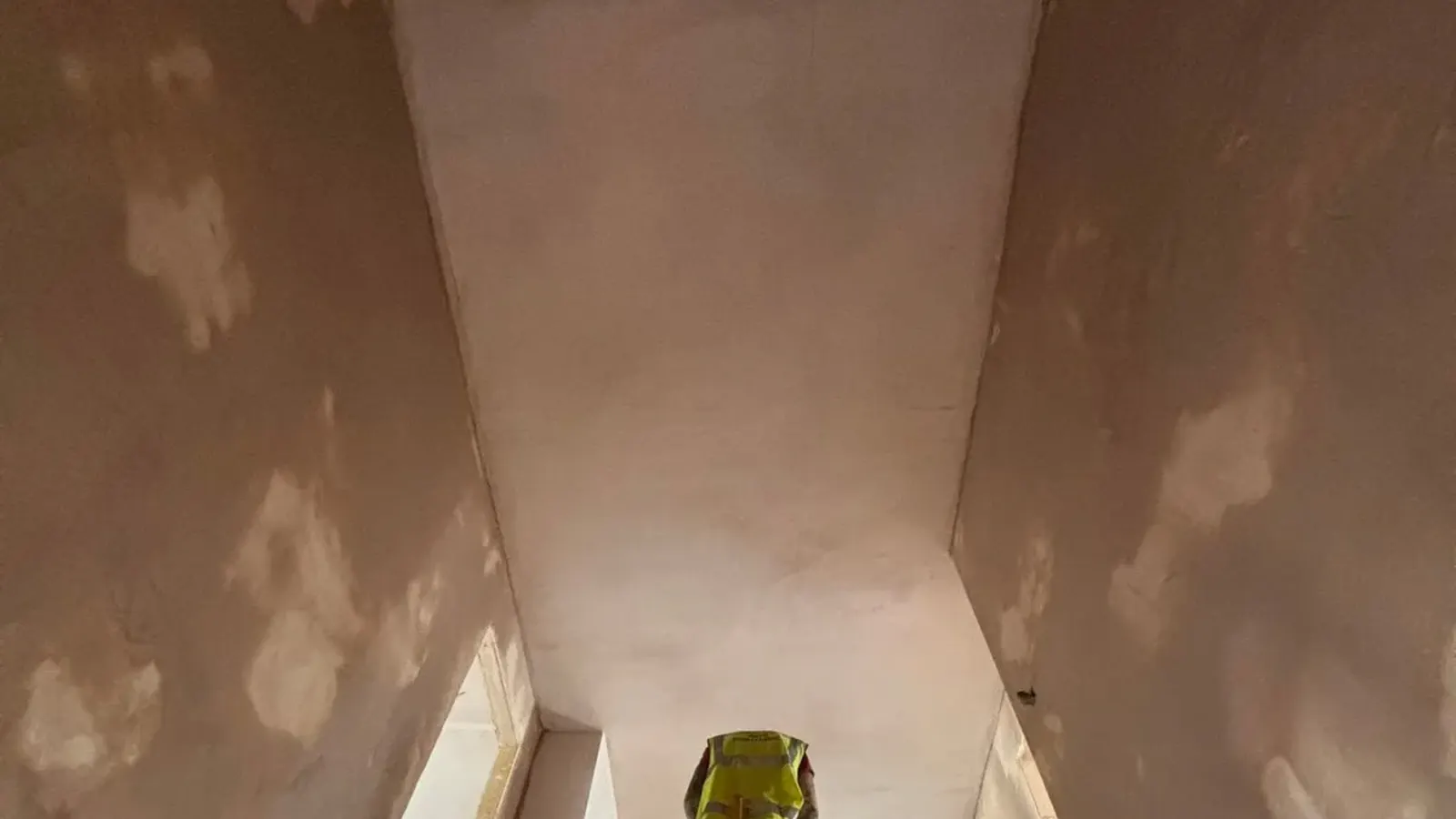
The question we get most from Kingswood homeowners is how much does it cost to replaster a house? The second is can we live in it while you do it? Here are both answers, plus the parts that don’t make it into most quotes.
What it costs
I’ll give you ballpark figures, with the caveat that a fixed quote only comes after we’ve seen the walls. These are typical ranges for a full re-plaster of walls and ceilings, not a promise:
| Property | Typical range |
|---|---|
| Small 2-bed terrace or end-of-terrace | £3,500 – £5,500 |
| 3-bed semi (1930s or post-war) | £4,500 – £7,500 |
| 4-bed or extended semi | £6,500 – £10,000 |
The gap within each band comes down to three things:
- What’s on the walls now. Plaster that’s sound but tired is cheaper to deal with than plaster that’s blown, hollow or full of old patches.
- What’s underneath. Some walls need a backing coat to even them out before the finish coat goes on. Some ceilings need re-boarding.
- How much clearing we do. A house emptied of furniture is quicker and cheaper than one we have to shuffle around.
We do a free site visit and send a fixed written quote within 48 hours, so you see the real figure rather than a guess.
Kingswood houses: what we usually find
Kingswood is mostly 1930s and post-war semis, and they behave differently.
1930s semis. Ceilings are often lath and plaster. They can look fine, then sag or drop after decades of vibration and old leaks. Walls may carry several layers of old plaster, wallpaper and paint. Chimney breasts are the usual trouble spot: salts and past damp make the plaster blow.
Post-war semis. Walls are often a harder sand-and-cement or gypsum base that’s been patched over the years. Ceilings are more likely to be plasterboard, which is easier to deal with, though it can have been skimmed badly or textured.
In both, I’d rather strip a wall back and see what’s there than skim over a guess.
The stages, in order
- Survey. We tap walls, check for damp, and look at ceilings from above where we can. We then decide which rooms need stripping and which can be skimmed.
- Clear and protect. Floors sheeted, doors and stairs covered, furniture out of the work area or wrapped.
- Strip off. Old plaster comes off the walls that need it. This is the dusty, noisy bit, usually a day or two for a typical semi.
- Repair and prepare. We fix any failing backing, re-board bad ceilings, fit beads at corners, and treat the surface so the new plaster bonds.
- Plaster. A backing coat where it’s needed, then the skim finish. We work room by room so the walls are finished while they’re workable.
- Drying. This takes longer than the plastering itself.
- Mist coat and paint. Your job, or your decorator’s, once the walls are properly dry.
The full process is set out on our full house replastering page.
How long it takes
For a typical 3-bed semi, expect roughly a week and a half to two weeks on site from stripping to final skim. A smaller house can be quicker; a bigger or more awkward one will take longer. Weather doesn’t really hold indoor work up, which is why winter is a good time for it.
Then comes drying. Walls need a week or two before you paint, and in cold, damp weather it can be longer. So plan on three to four weeks from the first day on site to a painted room. That’s the number to keep in mind if you want things finished before Christmas.
Drying it properly in cold weather
New plaster dries more slowly when the air is cold and damp. Don’t try to speed it up by pointing a fan heater at the wall. Rapid, uneven drying is what causes cracks.
Instead:
- Keep the room gently warm, with the heating on low.
- Open a window slightly so the moisture can leave.
- Wait until the plaster is an even pale pink all over, with no dark patches.
- Then apply a watered-down mist coat of emulsion before your topcoat.
Painting too early is the most common reason a good plaster job ends up with flaking paint.
Can you stay in the house?
It’s possible, but it needs honest planning. Plenty of people do it. What it looks like in practice:
- We work room by room, so you can keep a bedroom and the kitchen out of the work for most of it.
- There will be dust, even with sheeting and care, and some noise on strip-out days.
- Rooms with wet plaster can’t be used normally until the plaster has set. You can’t hang pictures or push furniture against fresh walls.
- Families with small children, anyone with asthma, or anyone working from home often find it easier to stay with family or friends for the messiest days. That’s usually the first few days, not the whole job.
If you’re staying, tell us at the survey and we’ll plan the order of rooms around you.
The honest catches
- Damp comes first. If a wall is damp because of a leaking gutter, a bridged cavity or a failed damp course, new plaster just hides it for a year or two. We’ll tell you if we think the cause needs sorting before we start.
- Textured ceilings. Artex and similar coatings put up before 2000 can contain asbestos. Don’t sand or scrape them. Get a sample tested first. Skimming over is often the simplest fix if it comes back positive, but get the test done before anyone starts work.
- Surprises behind the plaster. Old wiring, patched-up chimney breasts, and walls out of true all show up once the old surface is off. If you’re planning rewiring or new radiators, do the first fix before we plaster, not after.
- Full replaster isn’t always necessary. If half the house is sound, skimming those walls costs less than stripping them. We’ll say so.
Why book now
Indoor work doesn’t depend on the weather, and a lot of people want rooms finished before Christmas. The run-up to it fills up fast. If you want a house plastered, dried and painted by then, the sensible time to get a quote is in the next few weeks, not in November.
KD Plastering & Rendering is based in Hanham, so Kingswood is on our doorstep. The plastering carries a 5-year workmanship warranty, and we hold £10m public liability insurance.
If you’d like a fixed price on your own house, get in touch and we’ll arrange a free visit.
