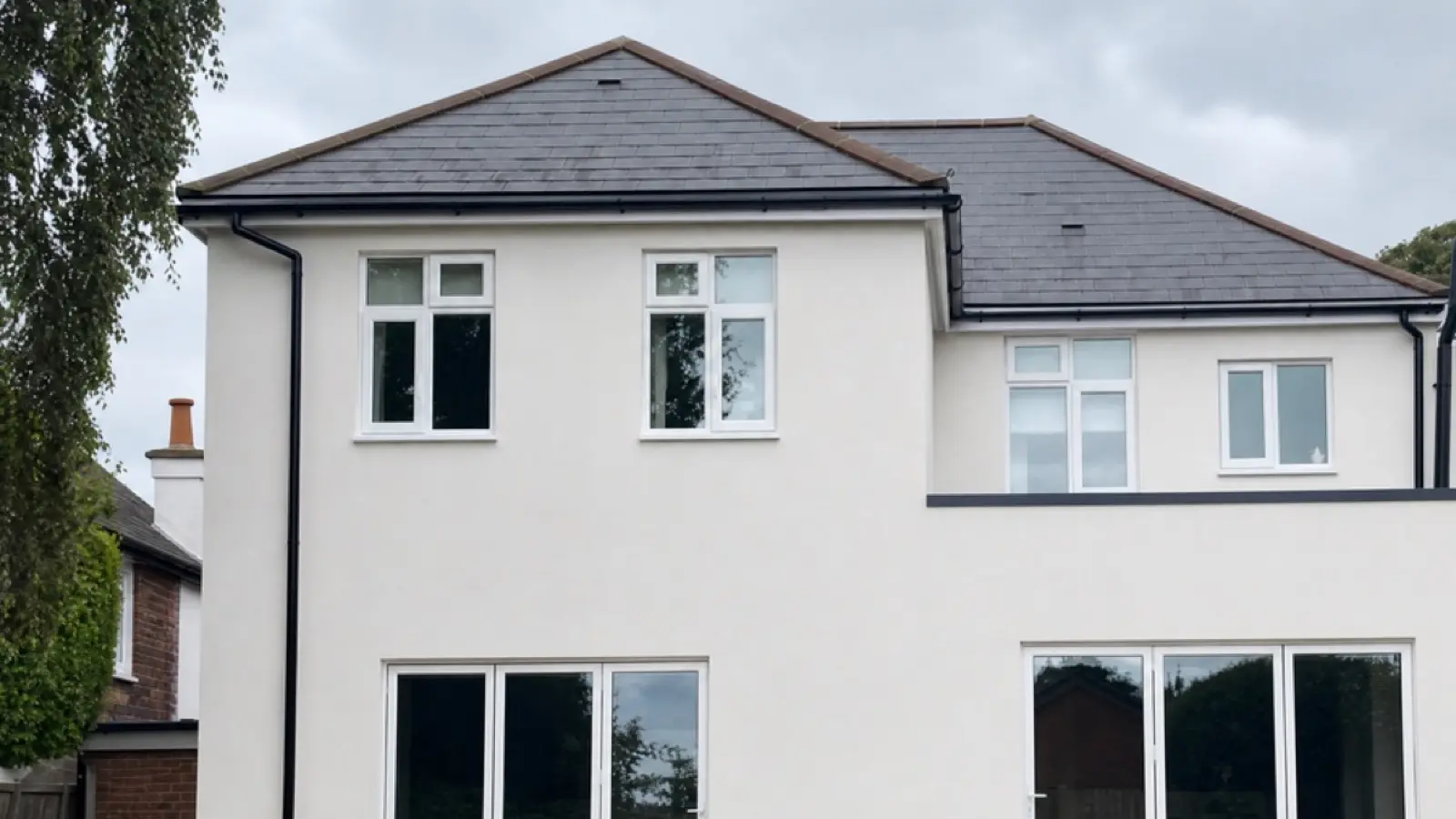
Stripping old render is noisy, messy and a big part of the cost of a re-render, so it is no surprise that people ask whether the new render can just go over the top. Sometimes it can. The deciding factor is not the new render you want, it is the state of the old render underneath.
The short answer
- Old render sound and well bonded: silicone can usually go over it, on a new reinforced base coat.
- Old render hollow, cracked through or crumbling: it has to come off. Anything you put on top is only as good as what it is stuck to.
- Monocouche over old render: possible on a sound mineral surface, but it is a much heavier coat and less forgiving, so we strip more often when a customer wants monocouche.
How we decide
We tap the whole wall. Sound render gives a solid knock. Render that has come away from the brick sounds hollow. A few small hollow patches can be cut out and filled. If the hollow areas are large or joining up, the old coat is failing, and putting new render on it means putting new render on a layer that is already letting go.
We look at the cracks. Fine surface crazing is not a problem for an overcoat. Cracks that run in straight lines from window corners or along a lintel tell us the wall moves there. Those need the new system to be beaded and meshed to cope with it, and sometimes they point to a structural issue that needs looking at before any render goes on.
We check what is on the surface. Painted render, old masonry paint and sealers stop a new coat bonding properly. They have to be removed or treated first, and on some walls that is more work than stripping.
We check for damp. If the old render is holding water, covering it traps the problem. The wall needs to be dry and the cause of the water fixed first.
What an overcoat actually involves
Done properly, silicone over old render is not one thin coat on top. Loose and hollow areas are cut out and repaired. A base coat goes over the whole wall with fibreglass mesh bedded into it, which ties the old and new together and spreads any movement. Then a primer, then the silicone finish, about 1.5mm thick. The mesh is what makes it last. A quote that skips it is not saving you money.
Pebbledash
Sound pebbledash can often be overcoated the same way: a levelling base coat fills the stones and gives a flat surface with mesh, then the silicone. It saves stripping one of the hardest finishes to remove. But pebbledash from the sixties and seventies is now fifty years old, and a lot of it is blown in places. The tap test decides it, not the age.
Things that change when the wall gets thicker
An overcoat adds thickness, so check the quote covers:
- Window sills still overhanging the new surface, with a drip, so water falls clear of the wall.
- Reveals around windows and doors finished neatly to the frames.
- Pipes, meter boxes and lights taken off and refitted, not rendered round.
- A bead above the damp-proof course, so the new render stops clear of the ground.
Overcoat or strip: the trade-off
Overcoating saves the strip-out, the skip and a few days of scaffold, so it is usually cheaper. Stripping costs more but starts from a clean wall you can see, with no surprises left underneath. When the old render is sound, we overcoat. When we are not sure it is, we would rather strip than leave you with two layers of render coming off together in five years.
We will tell you which applies to your house, and why, on a free survey.
